Does Home Insurance Cover Basement Flooding and Water Damage?
Yes, home insurance may cover some basement water damage, but it usually does not cover basement flooding from outside water. That simple answer trips up a lot of homeowners because a wet basement can look the same no matter where the water came from.

After all, whether it was a burst pipe or heavy rain, the floor is still soaked. Yet insurers care a lot about the source. In plain terms, water that starts inside the home is often treated differently than water that enters from outside. Here's a simple breakdown of what's usually covered, what isn't, and when separate flood insurance can fill the gap.
The short answer, basement water damage may be covered, basement flooding often is not
The key difference is where the water came from. Standard homeowners insurance often covers sudden, accidental water damage from inside the home. However, it usually excludes flood damage caused by outside water.
So, if a pipe bursts in the basement, your policy may help. On the other hand, if heavy rain sends water through the foundation or rising groundwater pushes in, standard home insurance usually won't pay.
That's why two soaked basements can lead to two very different claims.
When a homeowners policy may pay for basement water damage
Coverage usually applies when the event is sudden and accidental, not when damage builds over time. Common examples include a burst pipe, a frozen pipe that broke after the home was properly heated, or an appliance hose that suddenly failed.
An overflowing plumbing fixture may also be covered, depending on the cause. In some cases, rainwater can be covered too, but only if it entered through roof damage caused by a covered storm, such as wind tearing off shingles.
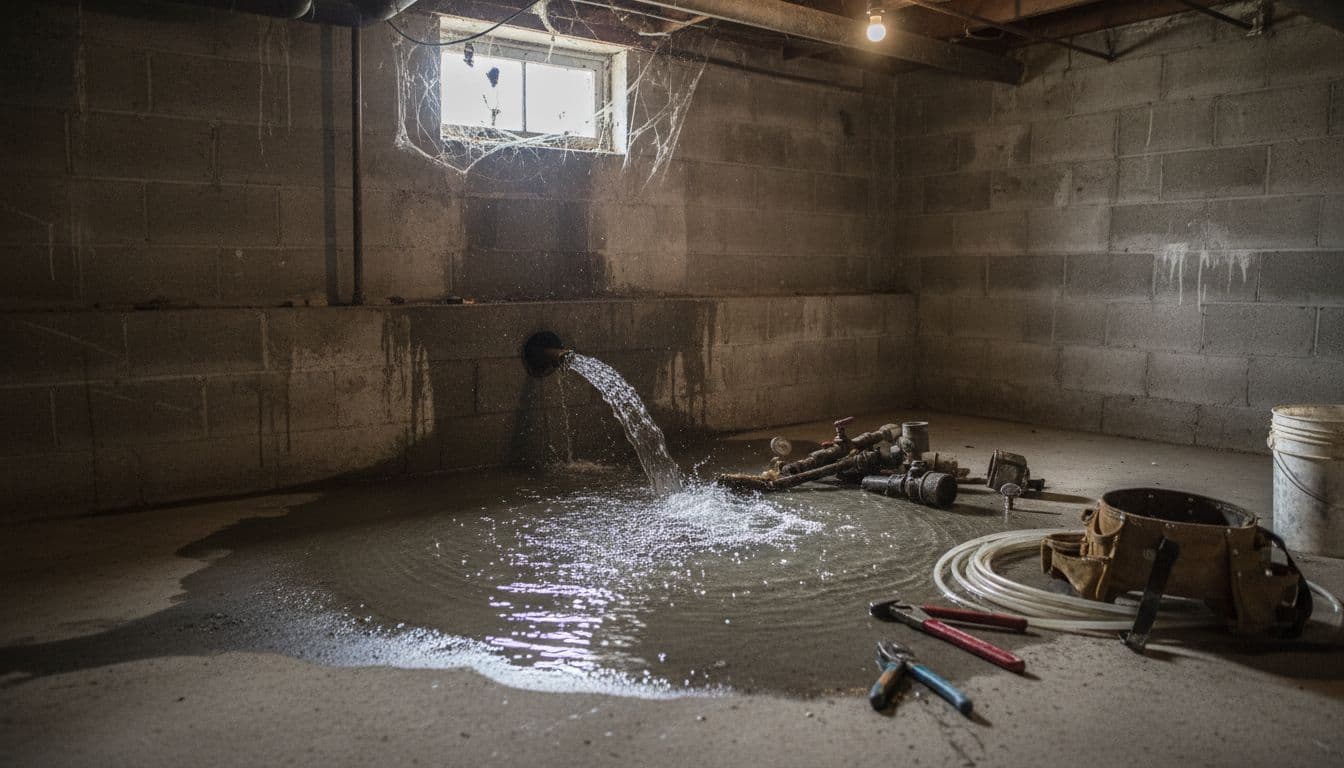
Even then, your policy may pay for the water damage inside, not the old roof itself if it simply wore out. That's an important split. Insurance is built for surprises, not aging parts.
When a homeowners policy usually will not pay
Most policies exclude water that comes from outside and enters at ground level. That means floodwater from heavy rain, street runoff, overflowing rivers, and rising groundwater usually fall outside standard coverage.
Policies also tend to deny claims tied to poor upkeep. That includes slow seepage through basement walls, long-term leaks, mold from neglect, and damage caused by failing to repair known problems.
Sewer backups are another common surprise. Standard homeowners insurance often excludes them unless you added a water backup endorsement.
For example, imagine a storm floods the street, and water pours into your basement through a window well. Even if the damage is severe, that's generally treated as flood damage, not standard water damage.
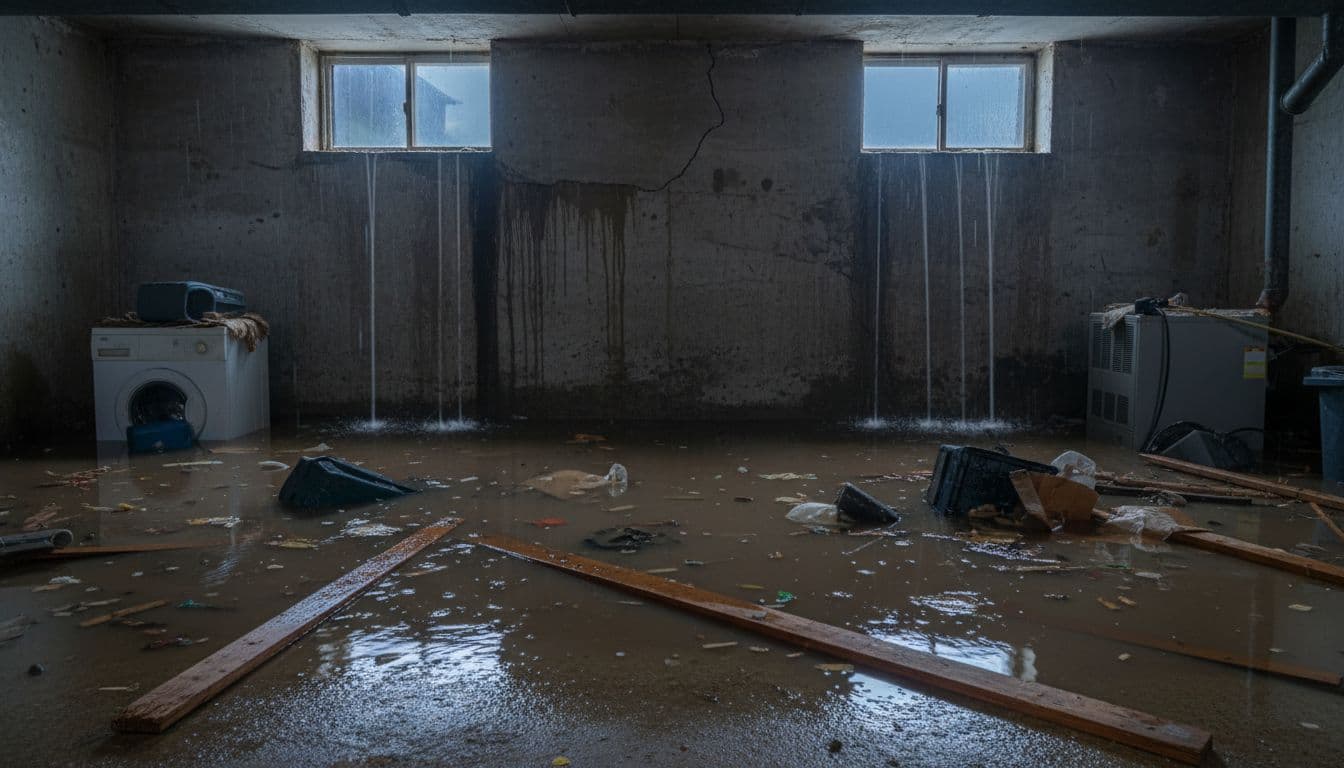
What counts as flood damage versus water damage in a basement
Many claim problems start with one wrong assumption: all water is treated the same. It isn't.
In simple terms, flood damage usually means water came from outside the home and affected the ground, the area around the house, or even nearby properties too. That can include storm surge, overflowing creeks, or heavy rain that pools and enters the basement.
By contrast, water damage under a homeowners policy usually starts inside the house, or enters through an opening created by a covered event. A burst pipe, broken supply line, or storm-damaged roof fits that idea.
If the water started outside and moved in, standard home insurance usually sees it as flood damage.
Insurers often focus less on how much water there is and more on its source. A few inches from a burst pipe may be covered. A few inches from outside runoff usually are not.
Common basement situations and how insurers usually classify them
Here's how several basement situations are commonly handled:
- Burst pipe in the basement: Often covered if the break was sudden and not caused by neglect.
- Sump pump failure: Usually not covered under a basic policy unless you added backup or overflow coverage.
- Sewer backup: Commonly excluded unless you bought a water backup endorsement.
- Heavy rain through basement walls: Usually treated as flood, seepage, or groundwater damage, so standard coverage often won't apply.
- Storm damage leading to a roof leak: Often covered if a covered storm created the opening and rain entered after that.
Because wording varies, the smartest move is to read your policy's water exclusions and endorsements, not just the summary page.
How to protect yourself before the next basement water problem
The best protection is a mix of the right insurance and basic home care. If outside water is your main risk, flood insurance matters because homeowners insurance doesn't replace it.
Most flood policies are bought through the National Flood Insurance Program (NFIP) or private insurers. As of March 2026, standard NFIP limits for a single-family home are $250,000 for the building and $100,000 for contents. Also, NFIP policies usually have a 30-day waiting period, so buying after the forecast turns ugly is often too late.
Risk isn't limited to beachfront homes either. About 25% of NFIP flood claims come from low- to moderate-risk areas. In other words, a basement flood can hit well outside a mapped high-risk zone.
When flood insurance or extra endorsements make sense
Flood insurance makes sense for homes in FEMA flood zones, but it's also worth a close look if your basement has flooded before, your lot drains poorly, or your area gets hard rain fast. Homes near hills, creeks, and overloaded storm drains can face the same trouble.
Private flood insurance may offer higher limits than NFIP coverage, which can matter if your home value is above federal caps. Meanwhile, a water backup endorsement can help with sewer and drain backups, which standard policies often leave out.
Smart prevention and claim steps that can save money
Good upkeep lowers your risk and can also help your claim. Clean gutters, and send downspouts at least 5 feet away from the house. Keep soil sloped away from the foundation. Seal visible cracks, insulate exposed pipes, and maintain your sump pump. If possible, raise furnaces, water heaters, and stored items off the basement floor.
If water gets in, act fast. Take photos and video before cleanup starts. Call your insurer right away, save receipts, and keep damaged items until the adjuster says otherwise. Just as important, be ready to show the event was sudden, not a long-term problem that got ignored.
A basement leak can feel like chaos. Still, clear records can turn a messy claim into a smoother one.
The bottom line
Basement water claims come down to one question: Did the water come from inside or outside the home? Standard homeowners insurance may cover sudden, accidental water damage, like a burst pipe. It usually does not cover basement flooding caused by outside water. Review your policy now, check whether you have sewer backup protection, and think about flood insurance before storm season arrives. A few minutes today can save a lot of stress later.


